
Understanding Hyperacusis
When Sound Hurts & How Relief Is Possible
Trigger Warning
This article includes descriptions of sound-induced pain, sensory overload, and daily challenges associated with hyperacusis. For readers living with sound sensitivity, migraines, tinnitus, or vestibular disorders, some sections may feel intense or familiar. Please read at your own pace and step away if needed.
For readers unfamiliar with hyperacusis, these descriptions are shared to provide context and understanding of what this condition can feel like in daily life.
What Is Hyperacusis?
Hyperacusis is often described as sound sensitivity, but that definition falls short. Hyperacusis is a complex auditory and neurological condition where everyday sounds can feel painfully loud, physically painful, or mentally overwhelming.
Hyperacusis is not a single experience. It exists on a spectrum and can change over time. In my case, it did.
Types of Hyperacusis
Hyperacusis is not a single condition. It includes several forms, and many people experience more than one over time.
PAIN HYPERACUSIS (Noxacusis)
Sounds trigger physical pain in the ears or head, such as burning, stabbing, or pressure sensations.LOUDNESS HYPERACUSIS
Sounds are perceived as excessively loud, even when they are objectively quiet or moderate.ANNOYANCE HYPERACUSIS
Sounds are not painful but feel overwhelming, irritating, or mentally exhausting, especially in busy environments.FEAR-BASED HYPERACUSIS (Phonophobia)
Anticipation of sound causes anxiety or distress due to past painful or overwhelming experiences.
*Hyperacusis may transition between different forms over time, which can result in changes in symptoms and treatment approaches. I am not a medical professional; this information reflects my personal experience and insights shared by fellow patients and is not intended as medical advice. Always consult a qualified healthcare provider for guidance specific to your situation.

MY First Year: Pain Hyperacusis & Loudness Hyperacusis
During the first year, I experienced both Pain Hyperacusis and Loudness Hyperacusis.
Pain Hyperacusis (Noxacusis)
Pain Hyperacusis meant that everyday sounds caused real, physical pain.
It was not discomfort or irritation. At times, it felt as if someone were drilling into my ear, similar to a high-pitched dental tool — relentless and piercing. Other times, it felt like burning or sharp, stabbing pressure deep inside my ears and head.
Sounds that triggered physical ear pain included:
Home & Kitchen Sounds
Dishes clinking or being put away
Running water — faucets, sinks, or the shower
Cabinets or drawers closing
Appliances humming, beeping, or cycling (dishwasher, microwave, refrigerator)
Technology & Electronic Sounds
Phone notification tones or alerts
Keyboard typing or mouse clicking
Computer startup or system sounds
Speaker feedback or sudden volume changes
Everyday & Public Sounds
Overlapping voices or conversations
High-pitched voices, including babies crying or toddlers screaming
Tire screeching and car horns
Public restrooms — industrial hand dryers and toilets flushing
At times, there was no warning and no way to prepare. Sound would rush in, and the pain would stop me mid-moment, leaving me frozen, disoriented, and nauseous. It often triggered a migraine or significantly worsened one, leaving me completely drained.
For people who have never experienced Pain Hyperacusis, it can be difficult to believe that sound alone can cause such intense levels of pain and discomfort.
Loudness Hyperacusis
At the same time, I experienced Loudness Hyperacusis. Unlike Pain Hyperacusis, where sound caused physical pain, Loudness Hyperacusis made sounds feel excessively loud, distorted, and intrusive. It was as if my brain had lost its ability to regulate volume.
Everyday noises that most people barely notice became overwhelming and difficult to tolerate, even when they were not physically painful. This constant amplification made it hard to filter sound, stay present in conversations, or remain in public or shared spaces without feeling overstimulated.
Causes of Pain & Loudness Hyperacusis
Research suggests these forms of hyperacusis are often linked to a combination of auditory and neurological factors, including:
Acoustic trauma or repeated noise exposure
Ménière’s disease
Vestibular migraine
Head injury or concussion
Tinnitus
Central nervous system sensitization
One of the most challenging aspects is that standard hearing tests frequently appear normal, despite severe symptoms.
the Pain Slowly Began to Ease
Over time, the pain component of my hyperacusis began to lessen. This did not happen quickly, and it was not linear. There were periods of improvement followed by setbacks.
Pain hyperacusis is believed to involve overactivation of pain pathways in the auditory system and brain, often linked to migraine mechanisms and trigeminal nerve sensitization. As my nervous system slowly began to regulate, the pain became less frequent and less intense. The sound sensitivity, however, remained.
A significant part of the improvement was supported by Tinnitus Retraining Therapy (TRT). TRT is a structured approach that uses gentle sound exposure, along with guidance from an audiologist, to help the brain reduce its heightened response to sound. Instead of complete sound avoidance, which can increase sensitivity over time, TRT gradually reintroduces low-level, neutral sounds so the auditory system can begin to tolerate them again. Over time, this process can help improve sound tolerance and reduce distress.
Living With Annoyance Hyperacusis Today
Today, I primarily live with annoyance hyperacusis. Sounds no longer cause physical pain most of the time, but they can still feel overwhelming, mentally exhausting, and difficult to tolerate.
This is especially noticeable in environments such as:
Restaurants with overlapping conversations
Crowded spaces
Social settings with background music
In a restaurant, for example, multiple conversations blend together. Voices overlap. Plates clatter. Music hums in the background. My brain struggles to separate sounds, making it hard to focus, follow a conversation, or stay grounded. Navigating these environments can feel draining and disorienting, even when they appear normal to others.
Causes of Annoyance Hyperacusis
Annoyance hyperacusis is often linked to central auditory processing rather than damage to the ears alone. Contributing factors may include:
Migraine disorders and vestibular migraine
Sensory overload
Fatigue and chronic stress
Central auditory processing strain
Even without pain, this form of hyperacusis still impacts daily life and quality of living.
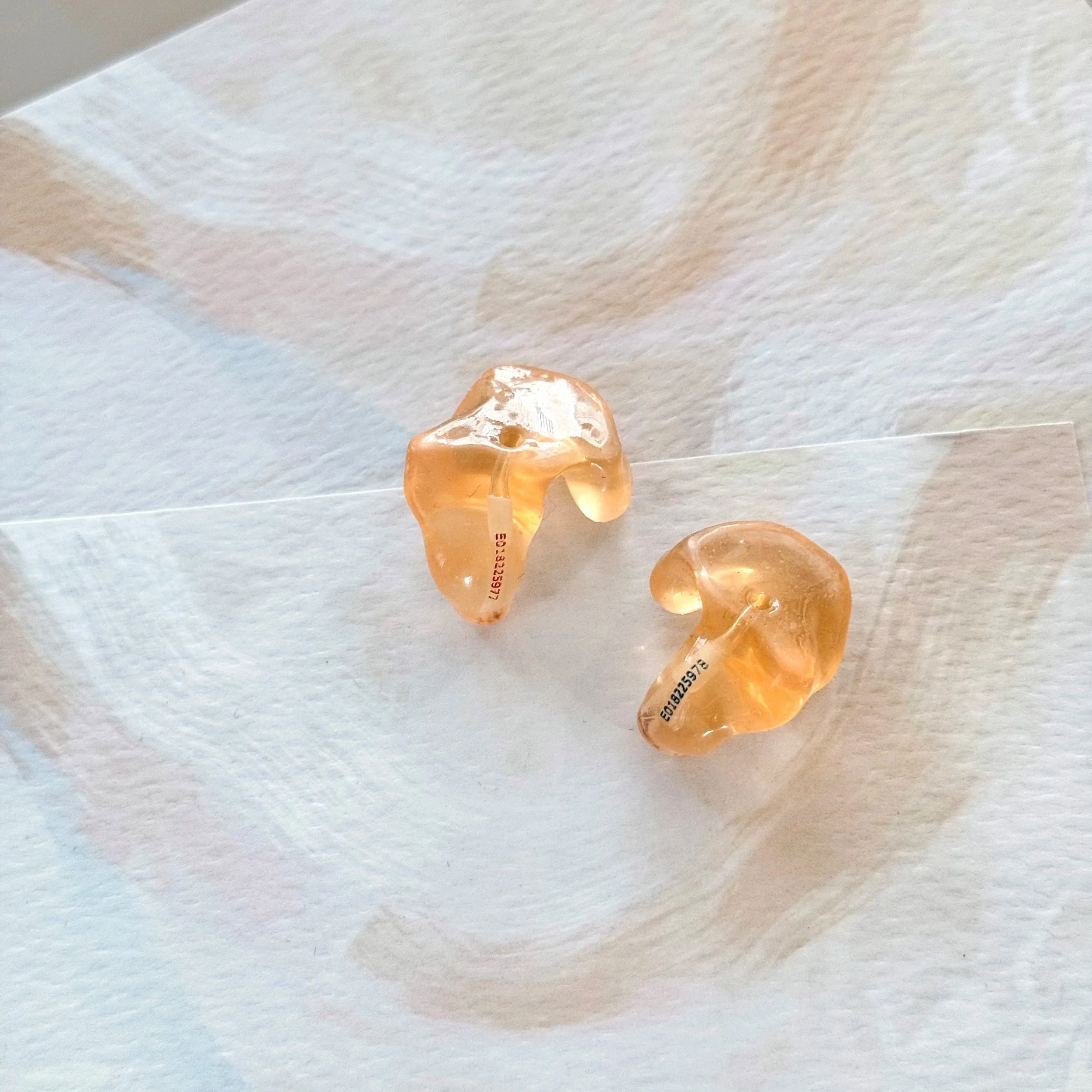
My custom-made Starkey earplugs — designed to filter high-frequency sounds that cause pain or sensitivity.
Sound Retraining Therapy
One of the most helpful tools in my recovery was sound retraining therapy.
Sound retraining therapy helps the brain relearn that sound is not a threat. Instead of avoiding sound completely, which can worsen sensitivity over time, this therapy introduces low-level, neutral sounds gradually and consistently.
The goals of sound retraining therapy include:
Reducing the brain’s threat response to sound
Calming the auditory nervous system
Improving long-term sound tolerance
This process requires patience and consistency. Progress is slow and gradual, but for me, sound retraining therapy played a meaningful role in reducing pain hyperacusis and stabilizing my overall sound tolerance.
Sound retraining therapy is not a cure, but it can support nervous system regulation and healing.
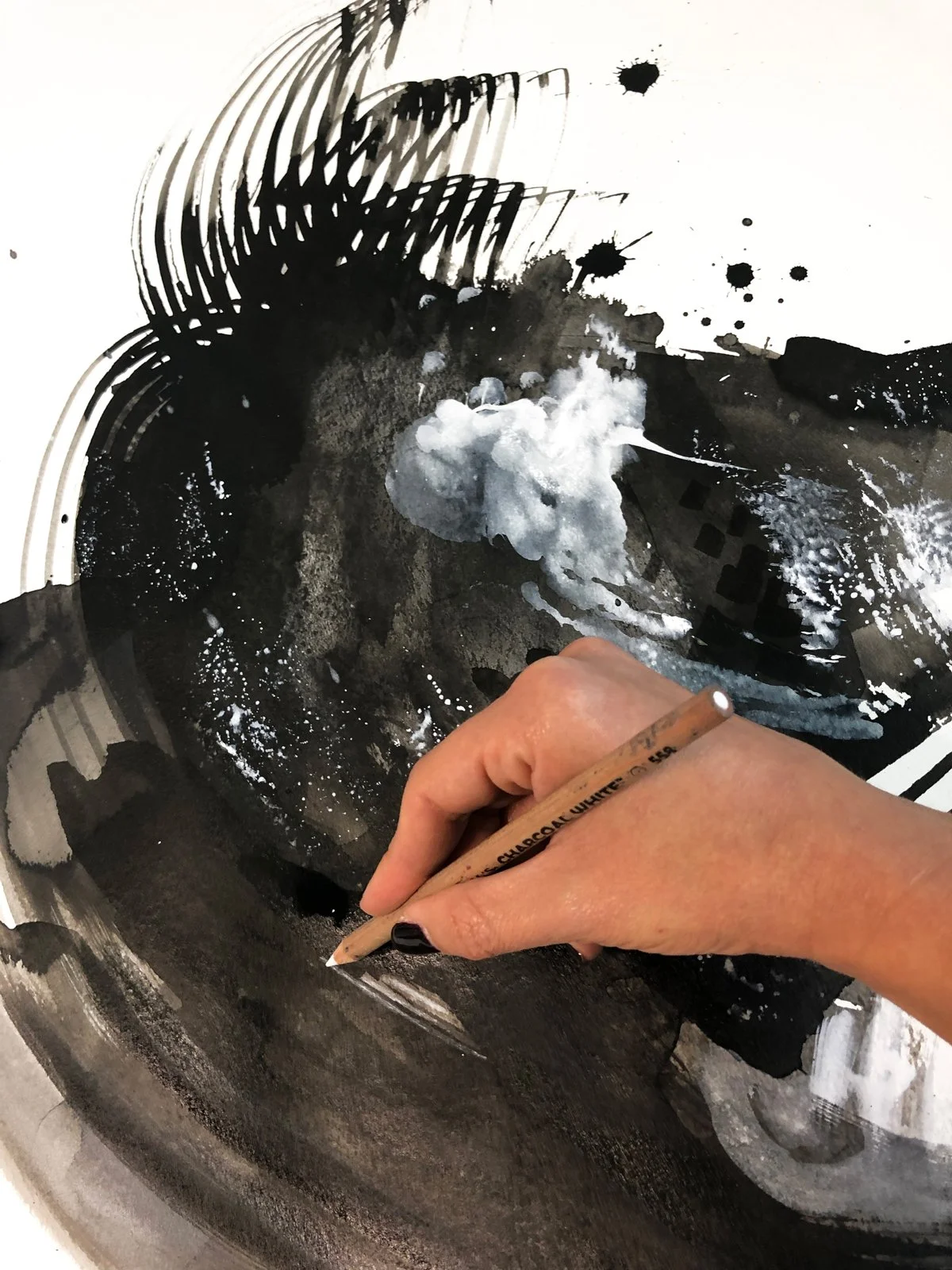
ART: A Steady Anchor in My Healing
At the beginning of my journey with Ménière’s (and hyperacusis,) I created to find a quiet space to hold my emotions and symptoms — and to offer a sense of calm to others navigating similar paths.
Art became an essential part of my recovery, allowing me to express physical sensations and emotions I often couldn’t put into words. When language fails, the work holds what my body and nervous system are carrying. It is a place of solace — a contained space where I can process overstimulation without pressure. There is no formula or rigid plan; the process is intuitive. Each piece becomes a pause, a moment of reflection, a way to settle.
But relief can come into your life in many other ways. It can come from simple things that help you slow down: listening to soft music that doesn’t aggravate your symptoms, spending time in nature, taking a relaxing walk without reaching for your phone, or being in spaces that feel calm and familiar. Even the presence of people who make you feel safe and understood can make a meaningful difference in your life and in your overall treatment.
→ Explore The Colors of Sound, my first sound-inspired works
Why Understanding the Types of Hyperacusis Matters
Hyperacusis is not a single condition. Many people move through different forms over time, as I did — from pain, to annoyance, to finding relief and tools that help regulate the nervous system. Improvement does not always mean returning to life exactly as it was before. Sometimes, improvement means:
Reduced pain
Better coping strategies
Learning how to navigate sound differently
Increased sound tolerance over time
Greater confidence in everyday environments
A clearer understanding of personal limits and triggers
Understanding these distinctions helps us as patients feel validated and helps healthcare providers offer more appropriate support. Keeping a journal of your symptoms can be incredibly helpful, especially when you’re able to look back and see how far you’ve come as relief begins to arrive.
A FINAL Note
If you are in the painful stage, I see you and I believe you. If you are in a quieter but still overwhelming stage, your experience matters just as much.
Hyperacusis may evolve over time, but it leaves a lasting imprint. That experience deserves compassion, continued research, and broader awareness.
Hyperacusis is real, complex, and deeply individual. Symptoms can shift, and learning how to navigate sound can make daily life more manageable. Sharing lived experiences helps reduce isolation and builds a more accurate understanding of what sound sensitivity truly feels like.
I wish you strength and patience on your healing journey. And if you are not living with hearing loss, tinnitus, or hyperacusis, but are here to learn and better support someone you care about, thank you for taking the time to understand.
“Hyperacusis is real, complex, and deeply individual. Sharing lived experiences helps reduce isolation and builds a more accurate understanding of what sound sensitivity truly feels like.”
Sources and References
Jastreboff, P. J., & Hazell, J. W. Tinnitus Retraining Therapy. Cambridge University Press
Tyler, R. S., et al. Hyperacusis and sound tolerance disorders. American Journal of Audiology
Baguley, D. M., & Andersson, G. Hyperacusis: mechanisms, diagnosis, and therapies. International Journal of Audiology
Coelho, C. B., et al. Hyperacusis and decreased sound tolerance. Otolaryngologic Clinics of North America
Fackrell, K., et al. A systematic review of hyperacusis research. Noise & Health
The Migraine Trust. Sound sensitivity and migraine
Cleveland Clinic. Hyperacusis: causes and treatment